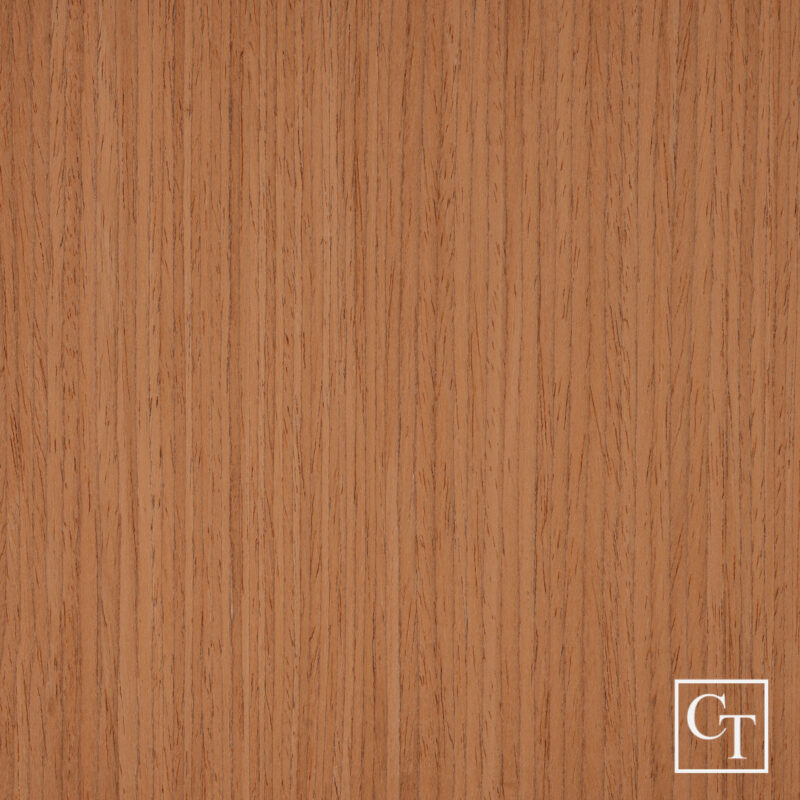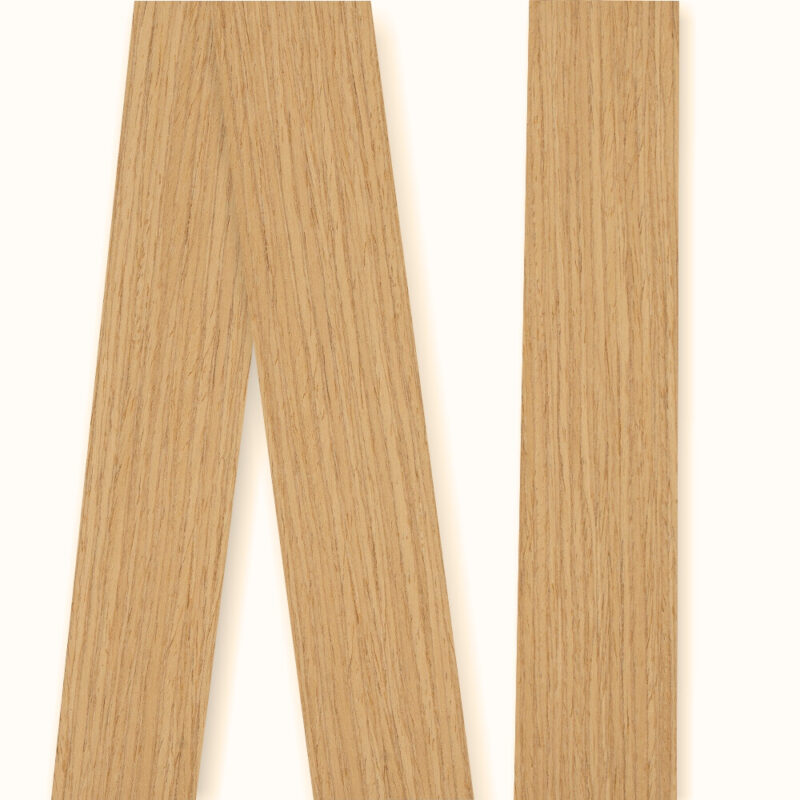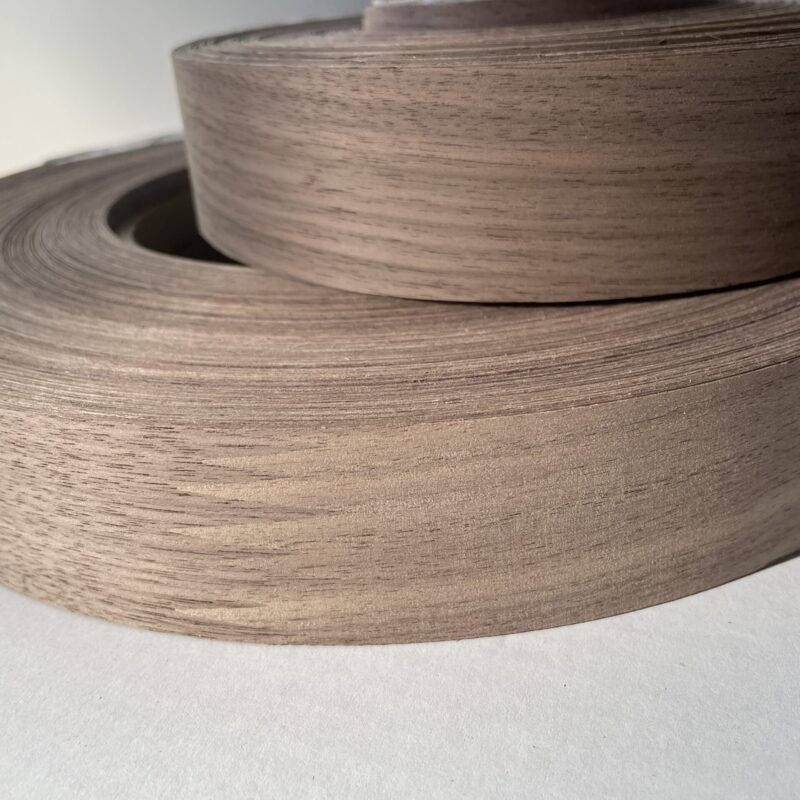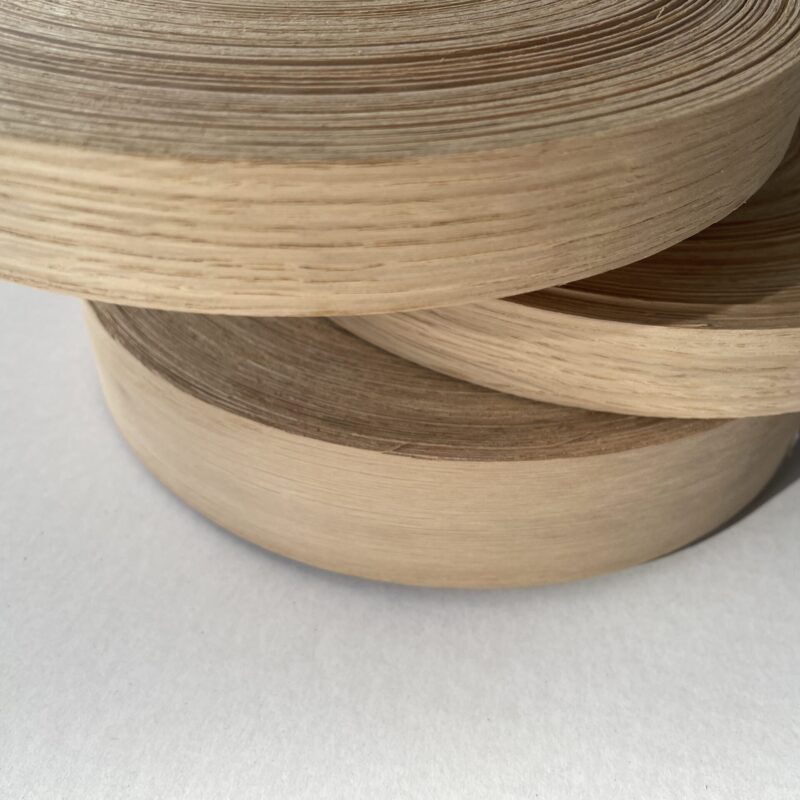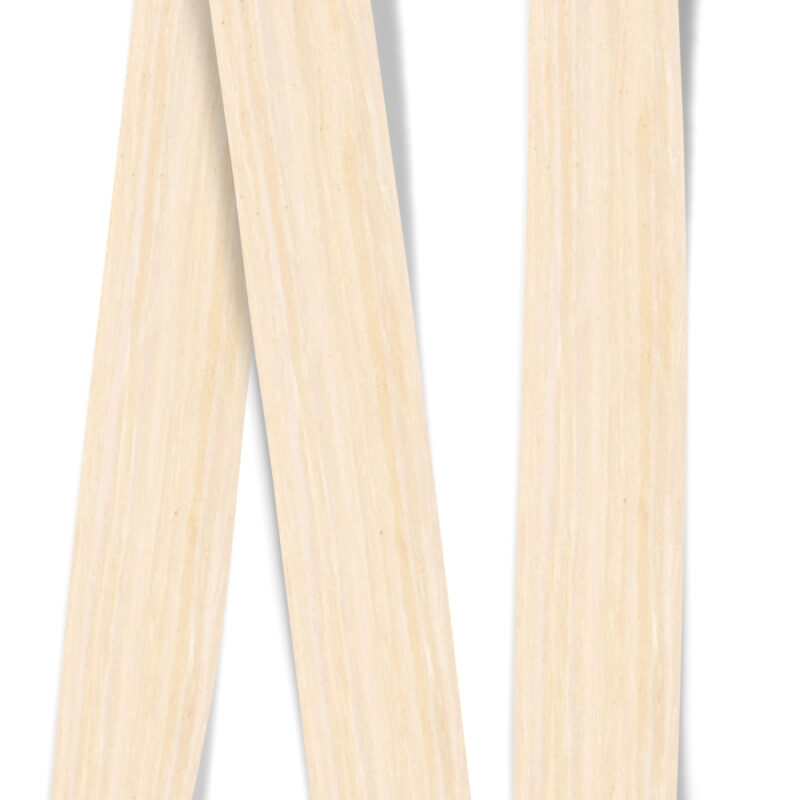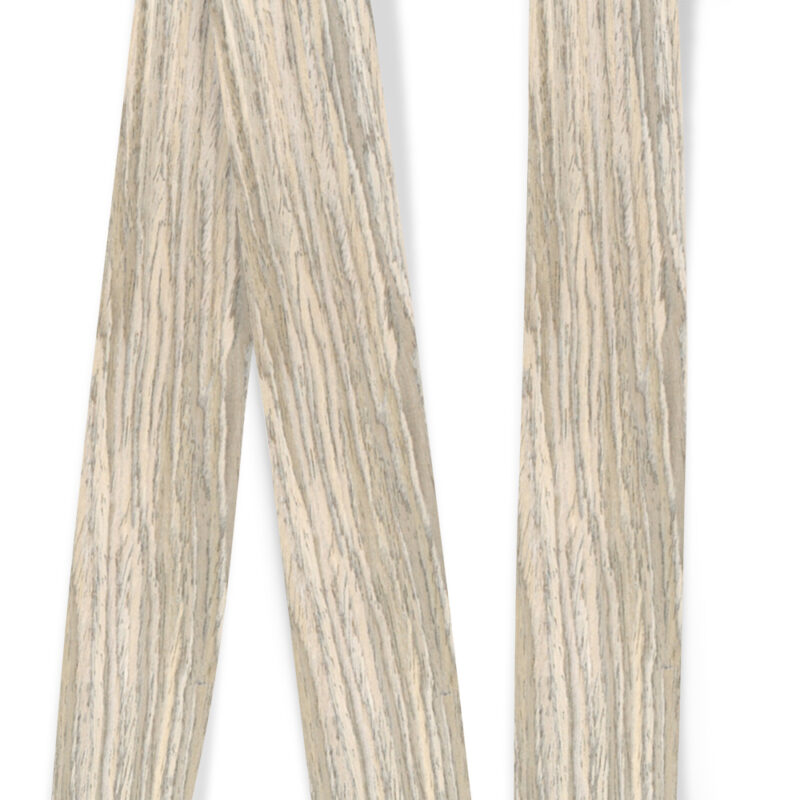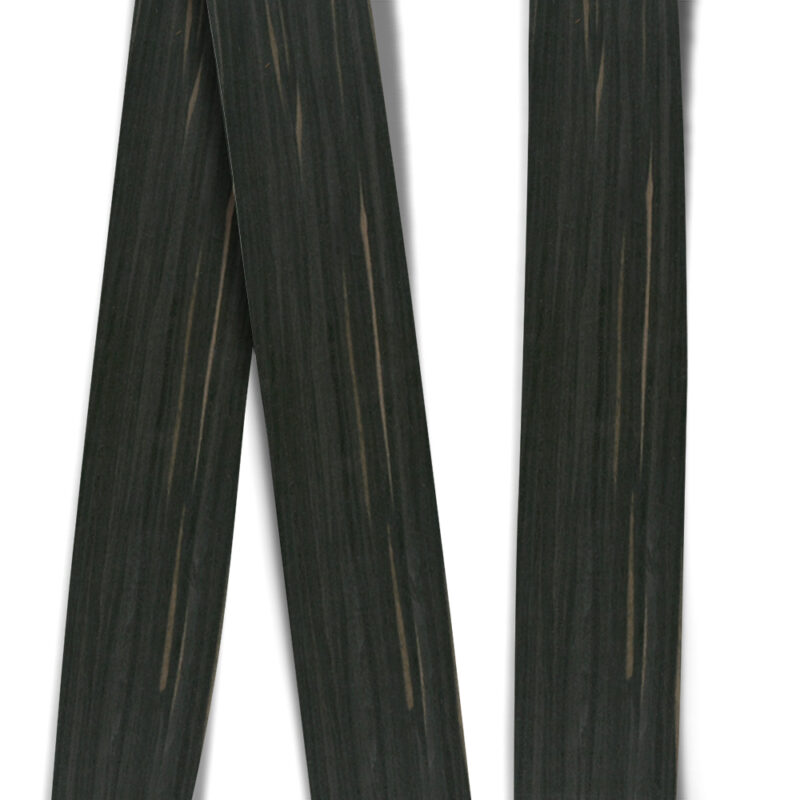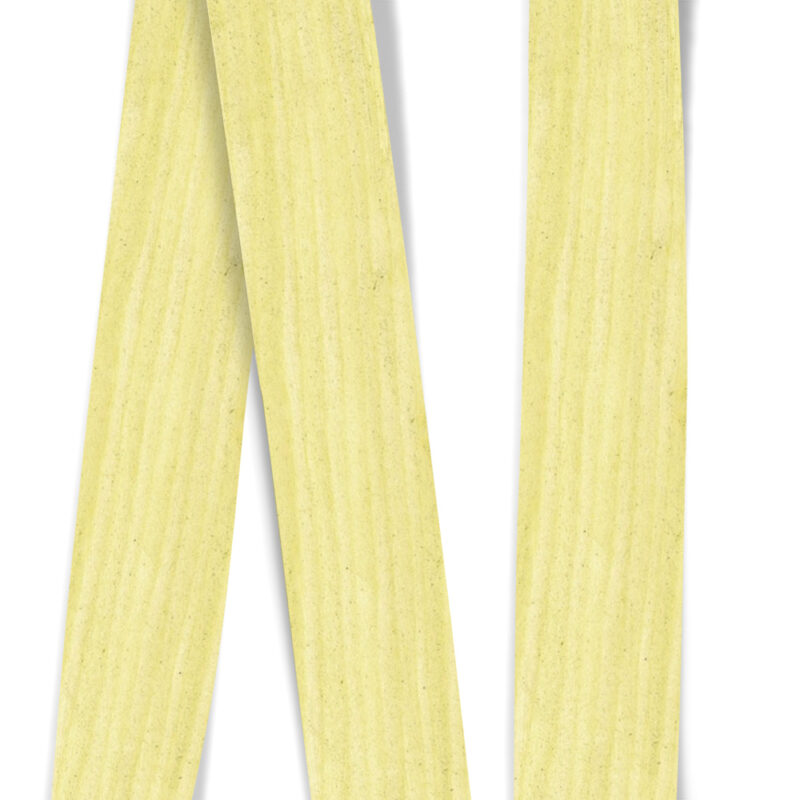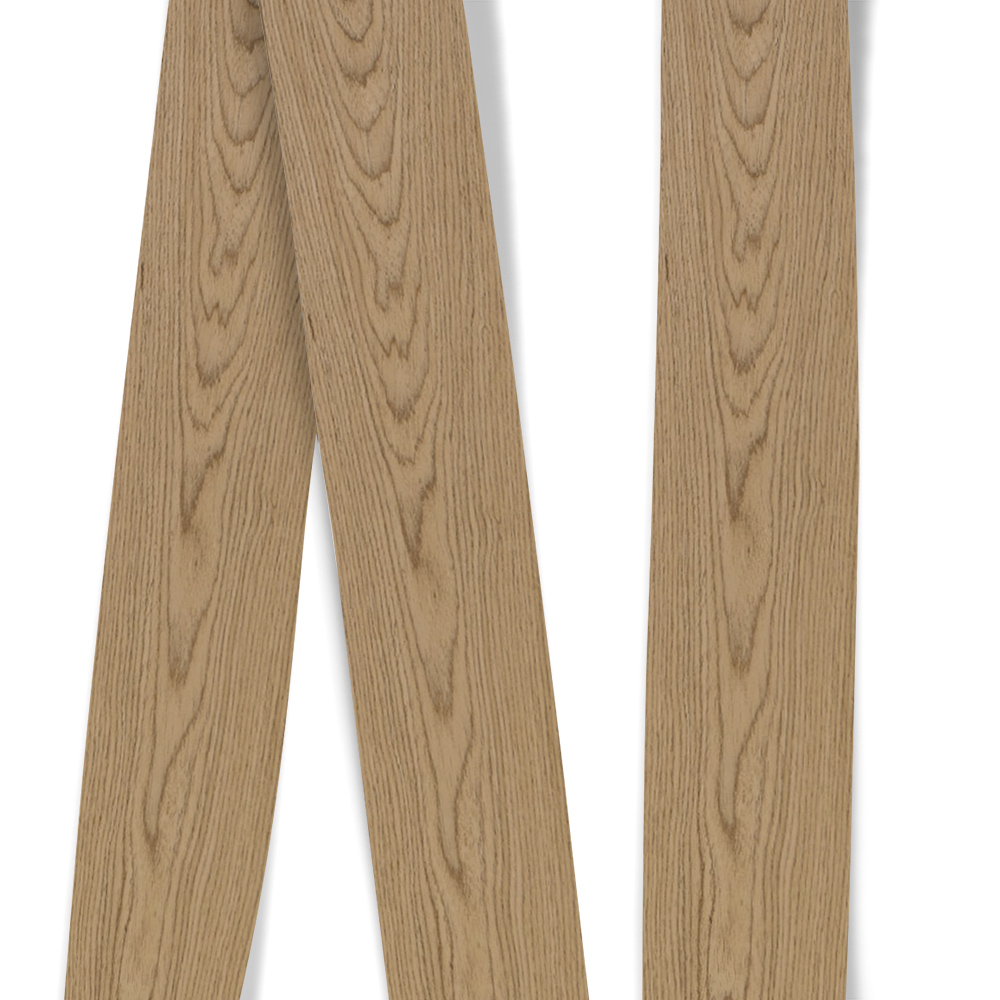
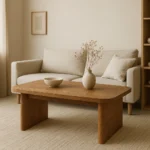
Edgebanding Solano Oak


Applications
Our edgebanding consists of engineered veneer strips joined using micro-joint technology. All edgebanding is backed with a non-woven fleece layer, ensuring greater stability and easier application.
We offer edgebanding in widths of 22 mm and 42 mm, with a thickness of 0.6 mm, available both with adhesive and without adhesive.
The veneer grain runs lengthwise, and the edgebanding is supplied in rolls of approximately 50 linear meters (±50 lm).
For larger quantity orders, please contact for availability and pricing details.
Specifications
| Rodzaj obrzeża | Without glue |
|---|---|
| Szerokość | 23mm, 42mm |
| Color | Light |
| Wood species | Oak |
| Grain | Crown cut |
Have questions?
Engineered veneer, also known as reconstituted veneer, is a thin layer of real wood. It is made from fast-growing tree species that undergo a special treatment process. This makes it possible to achieve consistent patterns and a wide range of decors inspired by various wood species. Engineered veneer retains the natural texture of wood while providing greater stability and pattern repeatability.
Natural veneer is produced by directly slicing a log, making each sheet unique with its individual grain. Engineered veneer is created through a technological wood modification process, making the pattern more consistent and predictable.
Both types of veneer are made of real wood and retain its natural properties. All engineered veneers offered by California Trading are additionally fleece-backed, which prevents the material from crumbling and makes it easier to apply, even on slightly curved surfaces.
Yes. Engineered veneer is 100% real wood. The modification process involves treating and layering the wood to achieve a specific decor and a consistent grain pattern. As a result, the wood veneer perfectly retains the appearance of natural wood.
The standard engineered veneer sheets in our offer measure approximately 2800 × 640 × 0.6 mm. This uniform format makes working with the material convenient and greatly facilitates the veneering of large furniture surfaces.
Yes. One of the greatest advantages of engineered veneer is its pattern consistency. This allows for a cohesive look across large furniture surfaces or entire interior design projects.
However, please note that consistency does not mean identicality. Veneers from different batches may have slightly different grain positioning or a slightly different shade. At California Trading, we make every effort to ensure that each batch is as close to the previous one as possible.
Veneer can be used in rooms such as kitchens or bathrooms, provided the surface is properly protected with varnish and shielded from direct exposure to water and moisture. Proper substrate preparation and professional surface finishing are also crucial.
Yes. Like natural wood, veneer can change color over time due to sunlight exposure. This is a natural phenomenon for wood materials. In the case of very dark decors, this change may be more noticeable.
Veneer is most commonly applied to furniture boards such as MDF, particleboard, or plywood. This material is widely used in the production of furniture fronts, wall panels, doors, and interior decorative elements.
Yes. Thanks to its consistent pattern, engineered veneer works exceptionally well on large surfaces, such as wardrobe fronts, wall units, or decorative panels.
Once applied, the veneer must be protected with an appropriate varnish, oil, or other wood finishing system. Varnish protects the surface from moisture, dirt, and mechanical damage while enhancing the natural texture of the wood.
Yes. Wood veneer can be varnished, oiled, or stained, just like solid wood. Before finishing, it is always recommended to perform a test on a small piece of the material to check the final result.
Veneer can be glued using various wood adhesives, according to the glue manufacturer’s recommendations. In practice, PVAc (PVA) glues or contact adhesives designed for wood veneers are most commonly used.
California Trading also offers a contact adhesive specifically designed for working with veneers.
Yes, however, working with veneer requires precision and the right tools. For larger projects or furniture production, it is highly recommended to have the veneering done by an experienced carpenter or furniture manufacturer using professional veneering equipment and finishing lines.
No. We offer natural veneer and fleece-backed engineered veneer, which requires bonding to the substrate with an appropriate adhesive and subsequent finishing.
Yes. California Trading delivers throughout Poland via courier services, as well as across Europe. For orders over 500 PLN net, we offer free shipping within Poland.
Veneer should be stored in a dry room at room temperature, ideally in a flat position. Direct contact with moisture and excessive sunlight must be avoided.
Yes. California Trading specializes in the wholesale distribution of engineered and natural veneers for furniture manufacturers, carpenters, and distributors. We also offer attractive discounts for larger veneer orders.
Yes. We have developed a discount system for our trade partners based on order value and long-term cooperation. Details can be found in the Partnership tab – California Trading.
Yes. Architects and interior designers can order sample books of our veneers. Catalogs are available in A5 and A4 formats, making it easy to present the material to clients. If varnished samples are needed, individual pricing is also available.
We maintain a large inventory of most engineered veneer decors, which allows us to process orders very quickly. Many orders are shipped the very same day. However, the exact delivery time depends on the order size and the delivery destination.


Related products